A 40-acre site in Dixboro is becoming a district-wide hub for hands-on environmental learning, supported by Capital Program renovations, a new greenhouse, and a planned solar canopy for outdoor learning.
The Freeman Environmental Education Center is the home to one of the oldest K–12 environmental education programs in the United States, and it is receiving a series of capital investments reshaping its indoor and outdoor learning spaces.
The AAPS Environmental Education (EE) program was established in 1959 by William B. Stapp, one of the founders of Environmental Education as a field. Today, the program serves approximately 500 classes and 10,000 students annually. Ann Arbor Public Schools’ students visit the center for field trips and project-based learning. The Freeman Center, rededicated in 2018, is an important element of the district’s commitment to environmental sustainability as outlined in the AAPS Environmental Sustainability Framework.
Four Key Takeaways on Capital Investments at the Freeman Center:
- Completed interior renovations include a science lab, an expanded classroom, ADA-accessible restrooms, and a refreshed central atrium.
- Outdoor projects include a fenced native plant nursery, rain gardens, trail signs, and ongoing invasive species removal with student participation.
- A greenhouse is scheduled to be completed in 2026, extending the growing season for the native plant nursery and expanding plant propagation for use at other AAPS school sites.
- An outdoor canopy with a rooftop solar array is in-progress and will generate renewable energy while providing a sheltered outdoor classroom space and reduce operational costs for the facility.
A Place-Based Learning Lab
According to Sarah Hill, Environmental Education Teacher for the AAPS Environmental Education Program, the program’s office had been managed out of a classroom space at Abbot Elementary prior to 2018. “Before Freeman, there was no home base for EE programming” Hill said. Instead, it operated out of borrowed office space in various school buildings, and moved locations based on available classroom and storage space over the many decades of its existence within AAPS.
The building and grounds of the rededicated Freeman Environmental Education Center have served other purposes, from farm land and lawn to previous school roles. Coert Ambrosino, the Environmental Education Lead Teacher at Freeman, describes the site candidly as an active restoration site. “It wasn’t, and still isn’t, a pristine ecological gem,” Ambrosino said. “We’re working with a restoration-based education model, with Freeman as a learning lab, getting kids involved in the outdoor work. We’re improving the site, both ecologically and as a place for education.” The 40-acre site now provides a permanent location for place-based learning at a scale that field trips alone could not achieve.
Indoor Renovations: Updated Classrooms and Shared Spaces
Several interior capital projects have been completed. Two classrooms were combined by removing a central wall, with one configured as a lab with sinks and the other as a large classroom. Further updates included:
- Natural Linoleum flooring
- LED lighting
- Updates to the projection and sound equipment
- Installation of an acoustic ceiling tile system
- An ADA-accessible restroom
- A water bottle filling station
- Upgrades to the fire and safety systems
The building’s central atrium, known as the Centrum, was repainted and refreshed, integrating learning moments into the space itself through graphics and design, honoring historical and modern elements of the EE Program.
“The work in the Centrum brightened the space and made it feel more polished,” Hill said. “Kids, when they walk in, have a sense that they’re in a special place.”
Outdoor Investments: Native Plants, Rain Gardens, and Restoration
Outside the building, the property is undergoing phased restoration. A fenced outdoor nursery allows staff and students to propagate native plants from seed, producing grasses, flowers, and tree seedlings. Much of this material has been installed in a courtyard, rain gardens, and prairie plots that now function as an example of native landscaping for other AAPS school sites.
“There are lots of opportunities for learning because we’re growing the plants ourselves and not just buying them, which is also a cost savings,” Ambrosino said. “The site was dominated by invasive species, so we are working on removing them and bringing in native plants to promote biodiversity.”
A recent rain garden project illustrates how capital work and education can converge. When a roofing project on the east side of the building was completed, heavy equipment disturbed a wet, grassy area. Rather than simply re-grading it, EE Program volunteers had the idea to reshape the site into a basin for a rain garden. “The soil disturbance that the equipment caused is what led to the new rain garden,” Ambrosino said. Students helped sheet mulch the area, and native plantings are planned for fall. “We were able to convert it into a garden for native plants to manage water and have an opportunity to teach.”
Service-learning projects have brought approximately 150 Huron High School students annually to the Freeman Center for invasive species removal and other hands-on projects. Restoration efforts have also included prescribed burns, conducted professionally, followed by student-led overseeding.
Ambrosino specifically mentioned the support of AAPS physical properties staff in managing the important work that restoring a large site involves. “Some of it has been as small as a shipment of mulch. Other times they’ve made a trip to deal with a dangerous tree that needs to be taken down or a trail cleared,” Ambrosino said. “These things have made the work that we can do with students and volunteers richer and more impactful.”
Upcoming Projects: Greenhouse and Solar Canopy
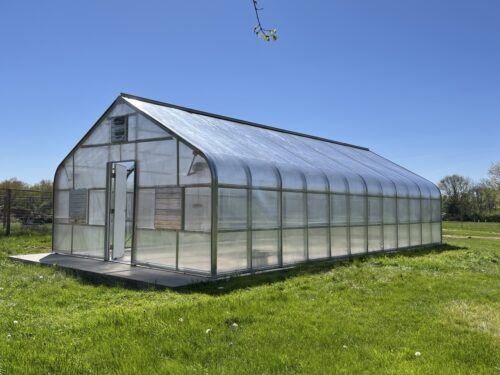
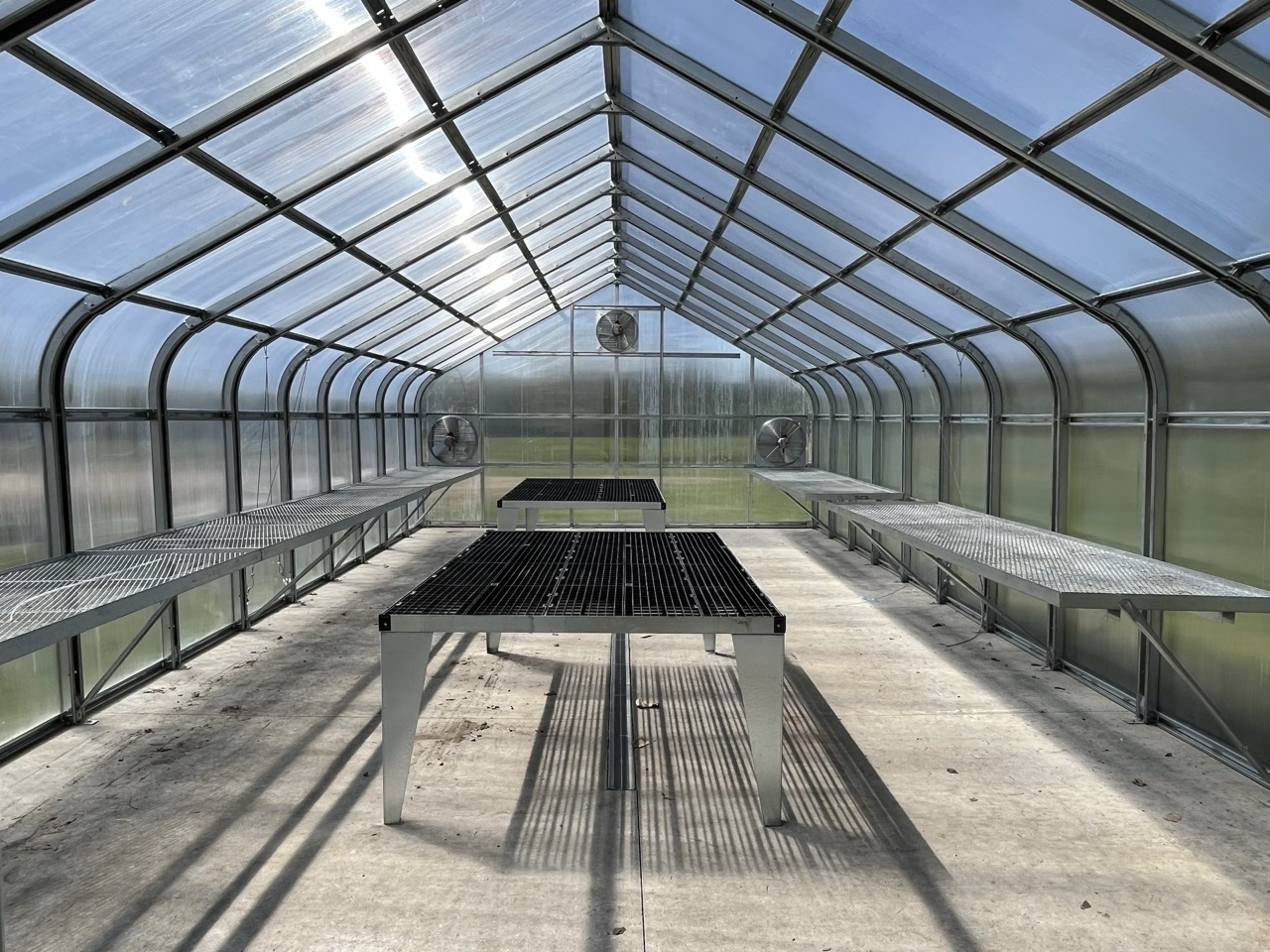
Two additional Capital Program projects are in the pipeline for the Freeman EE Center. A greenhouse, whose concrete foundation and conduit have already been poured, is scheduled for completion before summer 2026. The structure will extend the growing season and allow for propagation of plant species that can be transplanted to other AAPS campuses undergoing construction or renovation.
Ambrosino described the connection to the broader Capital Program: “As the construction and renovation work happens, there is a great need for plants. The vision is for campus plans to provide a portion of the native plants grown in-house, which is more meaningful, and which offers cost savings and more learning opportunities than just buying plants.”
The greenhouse also connects to expanding high school programming. A CTE Environmental Science class will allow students to conduct field work at the Freeman site. The goal is to launch the course at Skyline High School in 2026/27, and move the class to Freeman in the future, once additional building improvements can be made. Hill highlighted how infrastructure and programming reinforce each other.
“Having a greenhouse becomes a lot more meaningful when you have high school kids out there every day doing work,” Hill said. “It’s a nice piece of infrastructure that also provides more learning opportunities.”
A solar canopy is also planned for a former basketball court on the property. The structure will generate renewable energy, offset electricity costs for the building, serve as a teaching tool, and provide a shaded outdoor area for instruction.
Broader Site Use: Programming, Partnerships & Community Connection
Beyond classroom programming, The Freeman Environmental Youth Council, an extracurricular student club, works with Environmental Education staff to coordinate student volunteer efforts and contributes to site restoration. The Freeman Center also hosts summer camps (five weeks annually), professional development sessions, and community group events facilitated through partnerships with the AAPS Recreation & Education department (Rec & Ed).
Partnerships with the University of Michigan have also contributed to the center’s development. The U of M’s School for Environment and Sustainability completed an 18-month engagement that produced strategic planning for the site, and students from the Graham Sustainability Institute’s Scholars program have contributed to a signage project that will make trails more navigable for visitors.
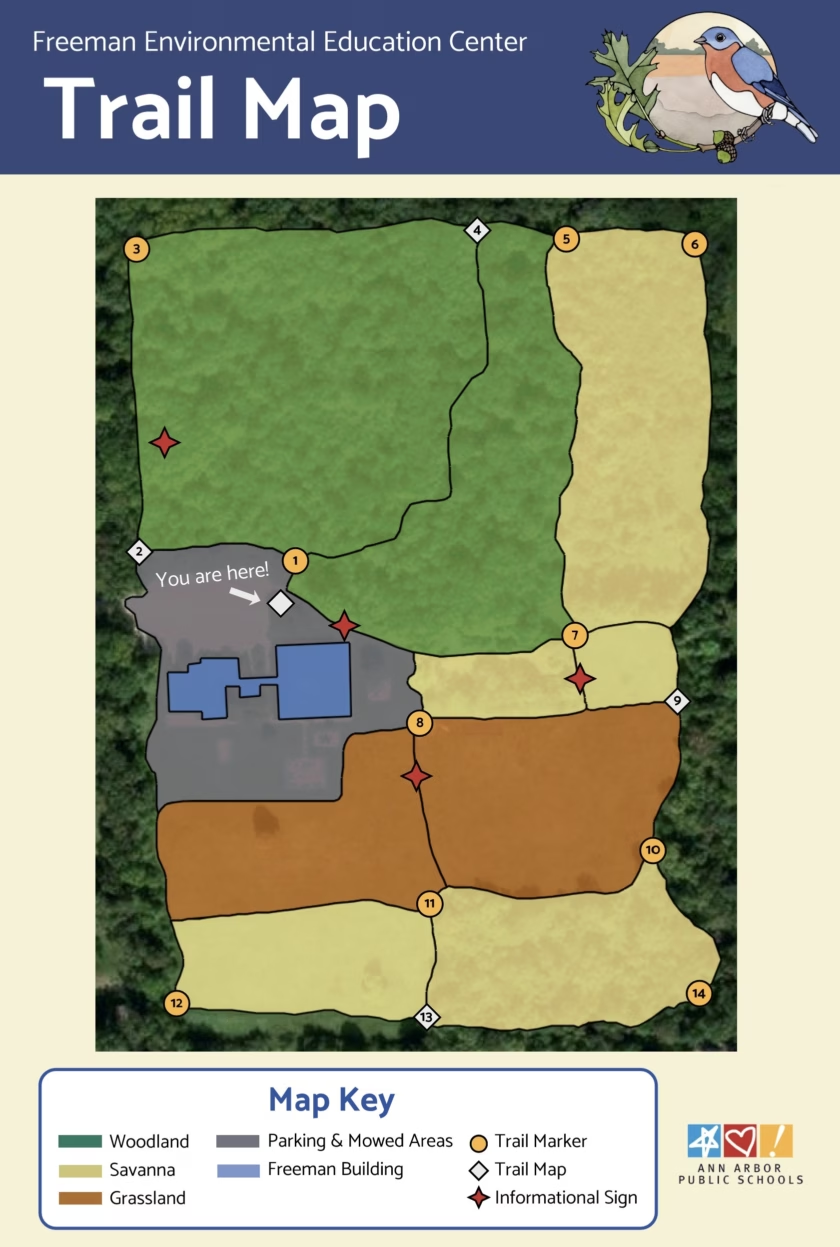
Another way The Freeman Center connects to the broader community is through open access to the network of trails providing access to the various ecological areas of the site, such as prairie, savanna, and forest. The district is currently completing a signage project which will provide both wayfinding and interpretive signs to enhance visitor experiences on the trails. A welcome kiosk, constructed by a Freeman Environmental Youth Council member for a Girl Scouts Gold Award project has been installed, and soon will welcome visitors with an overall site map and provide information about the campus. The interpretive signage will highlight the restoration work happening at the site and provide further information to community members spending time at the center’s trails.
Conclusion: A Connected System
Taken together, the completed classroom and centrum renovations, the outdoor nursery and rain garden installations, the forthcoming trail signs, greenhouse, and the planned solar canopy represent a coordinated set of investments across a single 40-acre property. Each project connects to the others. The nursery produces the plants that stock the rain gardens, and the greenhouse will extend that propagation capacity to serve other AAPS school sites. The solar canopy will add renewable energy generation while expanding sheltered spaces for outdoor instruction. For the Freeman Environmental Education Center, the Capital Program is not funding isolated upgrades. It is building out the physical infrastructure of a site – in alignment with the objectives of the AAPS Environmental Sustainability Framework – where thousands of students visit each year for outdoor learning opportunities, as part of the intentional progression of environmental learning experiences that they receive throughout their careers in Ann Arbor Public Schools.