
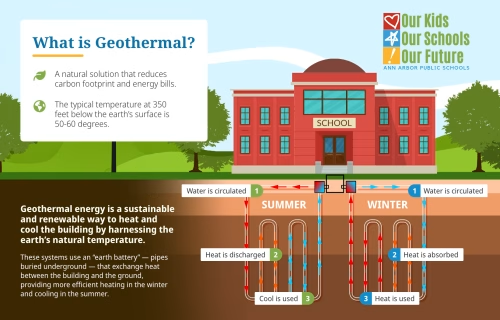
Ann Arbor Public Schools is installing geothermal heating and cooling systems in schools as an environmentally friendly and cost-effective alternative to traditional HVAC systems.
Harnessing the power of stable underground temperatures and the high thermal capacity of the earth, Geothermal (geo-exchange) systems are a transformative solution for sustainable heating and cooling. These systems provide an environmentally friendly and cost-effective alternative to traditional HVAC systems, which are powered by fossil fuels and chemicals.
This article explores the mechanics of geothermal systems, implementation considerations, environmental impact, financial advantages, and the future of geothermal in the Ann Arbor Public Schools.
5 Key Takeaways from this Article on Geothermal Heating and Cooling at AAPS
- Geothermal systems use the stable underground temperature of the earth to heat and cool buildings, maintaining comfortable indoor temperatures year-round.
- Space and soil conditions are critical for successful implementation of Geothermal systems.
- Geothermal heating and cooling systems are an environmentally sustainable option that effectively regulates indoor temperatures without the use of fossil fuels or toxic chemicals.
- The district could save hundreds of thousands of dollars each year on utility costs because geothermal systems are highly efficient and require less total energy to run.
- Using geothermal systems is a critical step for developing carbon neutral buildings and will significantly reduce the carbon footprint of the Ann Arbor Public Schools District.
The benefits of geothermal systems, including the overall durability, effectiveness, and efficiency, make them an attractive option for improving AAPS infrastructure to create net-zero-ready, 21st-century schools.
What Is Geothermal?
Geothermal is a word that describes the temperature, or heat, of the earth’s interior. At approximately 14 to 40 feet below (and beyond) the surface of the ground, the temperature of the earth remains stable all year-round. When discussing environmentally sustainable buildings, the terms “geothermal” or “geo-exchange” are typically used to describe a geothermal heating and cooling system, which is a way to regulate indoor temperatures by using the stable underground temperature.
How Does a Geothermal Heating and Cooling System Work?
Specially designed pipes inserted deep into the earth are filled with liquid which circulates from the ground to the building and back again. These pipes are known as bores when arranged in a vertical orientation. “Geothermal systems utilize a network of pumps, heat pumps, air handlers, and refrigeration processes to circulate source water, providing fresh, conditioned air to individual school spaces,” explained Casimir Zalewski, Senior Principle of Buildings at Stantec. Zalewski is the design engineer on several AAPS projects and specializes in designing environmentally sustainable mechanical systems for buildings, such as ventilation, heating and cooling.
While many people are familiar with residential geothermal systems which often use smaller pipes and simpler heat pumps sometimes arranged horizontally and much shallower below ground, larger buildings require a much more complex system. Large-scale geothermal systems require advanced engineering and careful planning. Whereas horizontal systems are limited by available space, large scale systems use vertical systems with advanced heat pumps which require deep boreholes—often hundreds of feet deep—in order to have the thermal capacity needed to exchange heat for large buildings.
The heat pumps push liquid through the underground pipes, where the temperature of the liquid rises or lowers to the stable underground temperature. This then allows heat to be exchanged between the earth and a building for more efficient temperature control. During the summer, warm water from the building dissipates heat underground, cooling to the stable temperature, and in winter cold water from the building absorbs heat underground, warming to the stable temperature.
Stephanie Corona is the Senior Project Executive at Gilbane Building Company, the AAPS owner’s representative assisting in the oversight of the Capital Program, which includes new school buildings. She describes the heat held underground as an “earth battery.” As Corona explains it: “During the summer, we’re using the ground to cool down the buildings, and during the winter we’re using the ground to heat them up.”
Lowering Carbon Footprint with Geothermal Heating and Cooling
Conventional HVAC systems rely on fossil fuels to create heat, and on electricity to extract heat from the air for cooling. In conventional HVAC systems, both heating and cooling processes release emissions into the atmosphere, direct greenhouse gasses from fossil fuels burned for heating and electricity, as well as excess heat generated by using compression for cooling.
In a geothermal heating and cooling system, heat is exchanged underground and stored for use. This method not only maximizes energy efficiency but also minimizes environmental impact by keeping the energy within the Earth rather than releasing it into the atmosphere. Geothermal heating and cooling systems are designed to balance energy, meaning that the systems minimize energy use in the process of exchanging heat. “By utilizing underground thermal mass, geothermal systems maintain consistent temperatures year-round, and significantly lower the carbon footprint,” Zalewski said.
Michigan’s most important natural resource is the state’s abundance of fresh water. The fresh water in the beautiful lakes, rivers, and wetlands are typically what comes to mind. But Michigan has another water-based superpower: groundwater. Water holds a significant amount of heat before the overall temperature changes noticeably, making groundwater an incredibly important component of a successful geothermal system. In many parts of Michigan, loamy or sandy soil and deep bedrock mean that there is significant thermal capacity right beneath our feet.
In addition, geothermal system infrastructure, which includes thousands of feet of buried piping and specialized drillers’ work, is built to last. Once installed, these systems operate for 20 or 30 years with minimal modifications, representing a long-term investment in sustainable climate control that outlasts many conventional HVAC systems.
Implementing Geothermal Systems for Schools
Using geothermal systems for schools still comes with its challenges. Not every site is suitable, as available space and soil composition dictate feasibility. Soil with a high clay content excludes the majority of groundwater making it much less effective for geothermal energy transfer than soil with a high loam or sand content. Highlighted the necessity for planning, Zalewski stresses that “implementing geothermal systems requires extensive test bores and thermal conductivity checks to assess ground performance, ensuring that the site is suitable for long-term sustainable energy extraction.”
Not all school sites have the necessary land area for geothermal fields, which is another limiting factor for where systems can be implemented. Most systems large enough to support school buildings need a field the size of a baseball field, although if soil conditions allow deeper boreholes this can reduce the overall footprint of the field.
With the support of Zalewski and Stantec, AAPS is creating plans for upcoming projects to install either partial or full geothermal fields depending on space and geological suitability. For example, Clague Middle School has a partial geothermal field with conventional HVAC available as a backup system for especially cold or especially hot days when the smaller geothermal system might not be able to keep up with the heating and cooling needs of the building.
Health Benefits of AAPS’ Geothermal Systems
In addition to the ecological benefits of the geothermal heating and cooling systems, AAPS is pairing the efficient heating and cooling with direct ventilation. In traditional HVAC systems, all interior air is returned, mixed with some fresh air and recirculated throughout the building. Direct ventilation pulls fresh air from outside through separated high efficiency filters and duct work and delivers it straight to the school’s rooms.
There are two major advantages to the direct ventilation aspect of the new systems. The first is improved air quality. Higher air quality improves student health, reducing respiratory issues and allergies. The second is adaptable climate control. The dedicated heat exchange units means that each space, whether a classroom or a common area, is directly adjustable so that consistent, comfortable temperatures can be maintained throughout the building. Comfortable indoor temperatures reduce distractions, improve concentration and contribute to improved mental and physical health outcomes for students.
Financial Considerations: Costs vs. Savings
“Drilling may appear messy, but people on site are professionals using specialized equipment to ensure that geothermal installations follow strict environmental and technical standards.”
— Caz Zalewski, Senior Principal of Buildings at Stantec
Installing geothermal heating and cooling systems requires an upfront investment. Site testing, environmental studies, engineering design, extensive planning, logistics, materials, drilling and infrastructure are significant investments that go into developing a geothermal system. Zalewski shared that “drilling may appear messy, but people on site are professionals using specialized equipment to ensure that geothermal installations follow strict environmental and technical standards.” The initial cost and complex installation processes of geothermal systems emphasizes the importance of thorough planning and continuous evaluation throughout the development process to ensure a successful project.
The reduction of utility costs for the district has immediate and long-term budget impact. The large up-front investment for installing the systems will be covered by the 2019 Bond. However, the savings from not having to pay for the power and fuel consumption of conventional HVAC systems will provide immediate relief to the general fund. The 2025 calendar year will be the first year that reduced heating costs will begin to impact the general fund with Forsythe Middle School’s full geothermal system and Clague Middle School’s partial geothermal system going through the first heating season on the new systems. As more geothermal heating and cooling systems come online with the new school projects, the general fund is expected to see increased savings.
Additionally, the projects at Forsythe and Clague Middle Schools are eligible for, and anticipated to receive a special direct pay tax credit on the geothermal projects through the federal Inflation Reduction Act. Although the status of the law and the incentive particulars are uncertain at the time this article is being written, the district could receive additional funding to support greater investment in our schools as a result of the credit.
Current and Upcoming Geothermal Projects
Ann Arbor Public Schools plans to implement geothermal wherever it is feasible as these systems align with the district’s Environmental Sustainability Framework and the sustainability criteria of the Collaborative for High Performance Schools (CHPS). “Not every site will work for these systems,” Corona shared. “Geothermal may not be possible in all schools, but every school will be evaluated to see which can support geothermal.”
“Mitchell Elementary geothermal installation has already started and Dicken Elementary School, Logan Elementary School, Slauson Middle School*, and Thurston Elementary School have all been approved by the Board of Education for geothermal heating and cooling systems,” said Corona. “Additional evaluations are underway for other potential locations, but for now, these five schools represent the formal commitment to expanding the district’s sustainable heating and cooling solutions.”
Long-Term Vision for Sustainability in the District
The district continues to lead by example in sustainability efforts through the investment in renewable solutions and reducing carbon emissions. The geothermal heating and cooling systems contribute to several of Ann Arbor Public Schools’ goals, including long-term infrastructure investment, immediate cost savings, sustainability, and educational benefits for students. The systems also contribute to the district’s overall plan for climate resilient schools, healthy school campuses, and responsible operations as described in the Ann Arbor Public Schools Environmental Sustainability Framework.
*As of January 2026, Slauson Middle School renovations are being revised to exclude a geothermal installation, as it is no longer feasible at this school site.