AAPS is working with renowned educational designer Fielding International to create flexible, empowering, collaborative, and integrated 21st-century schools.
The design and functionality of the spaces where we live, work, and learn have a profound impact on our daily lives. Ann Arbor Public Schools (AAPS) recognizes that the school environment can serve learning in more intentional ways. With the support of the community in passing a $1B bond, AAPS is investing in purpose-driven schools that integrate inclusivity, flexibility, and adaptability into the fabric of the structures. In partnership with acclaimed learning design firm Fielding International, the district is reimagining new school buildings where students are connected to peers, resources, and instruction in collective and differentiated ways. At the heart of this transformation is a belief in orienting spaces around the single most important asset we have: our people.
Five Key Takeaways about AAPS’ 21st-Century (Future Ready) School Buildings:
- The four principles driving design: flexibility, empowerment, collaboration, and integration.
- Fielding International brings decades of global experience to bear, collaboratively creating schools that use best practices in learning, teaching, and design.
- Neighborhood schools are an important part of the fabric of Ann Arbor, and AAPS and Fielding are helping preserve the school ‘culture’ in the design of the buildings.
- Neighborhood schools are community anchors and are designed to be good neighbors.
- The community’s support has been instrumental in creating 21st-century schools that will serve students for generations to come into the future.
Outdated Systems for Education
The assembly line was a brilliant invention to create nearly identical products quickly in large numbers. During much of the 20th century, the principles of uniformity and mass production influenced education. Schools were consolidated to large, age-based groups with standardized teaching methods and subjects. Classroom instruction imitated factory floors with a linear approach to education. And, like an assembly line, the expectation was that the majority of students would proceed to standardized, efficient, factory-like jobs upon graduation.
Rethinking the Factory Model of Education
Environments developed to prioritize conformity and efficiency over individual human needs no longer fit the dynamics of the ever-changing demands on the workforce in the 21st century. AAPS recognizes that investing in environments designed to center developmentally appropriate learning will serve generations of students in the future. These future ready schools are learning spaces that adapt to students—not the other way around. This includes a focus on universal design, flexibility across time and purpose, and creating environments that are welcoming, safe, and inclusive.
Designing Environments for Learning
Fielding International is at the forefront of educational design and has been leading the field for twenty years. Fielding’s interdisciplinary teams of architects, planners, designers, and educators have designed schools and university buildings in more than 50 countries across the globe. Together with Fielding, AAPS developed four guiding principles for designing the district’s 21st century schools: Flexibility, Empowerment, Collaboration, and Integration. These principles fold the district’s desired educational outcomes into every architectural, planning, and design decision.
Samantha Cucu, Principal at Mitchell Elementary, shared the element of the new school that fills her with joy: “…spaces intentionally designed for collaboration! The new schools allow for collaboration in spaces that are designed to be flexible and inspirational to our students’ learning and growth. Collaboration is a skill set that all learners need to develop as they grow and prepare for their future endeavors and relationships. These learning spaces allow for successful collaboration which leads to higher engagement and for the opportunity to spark creativity.”
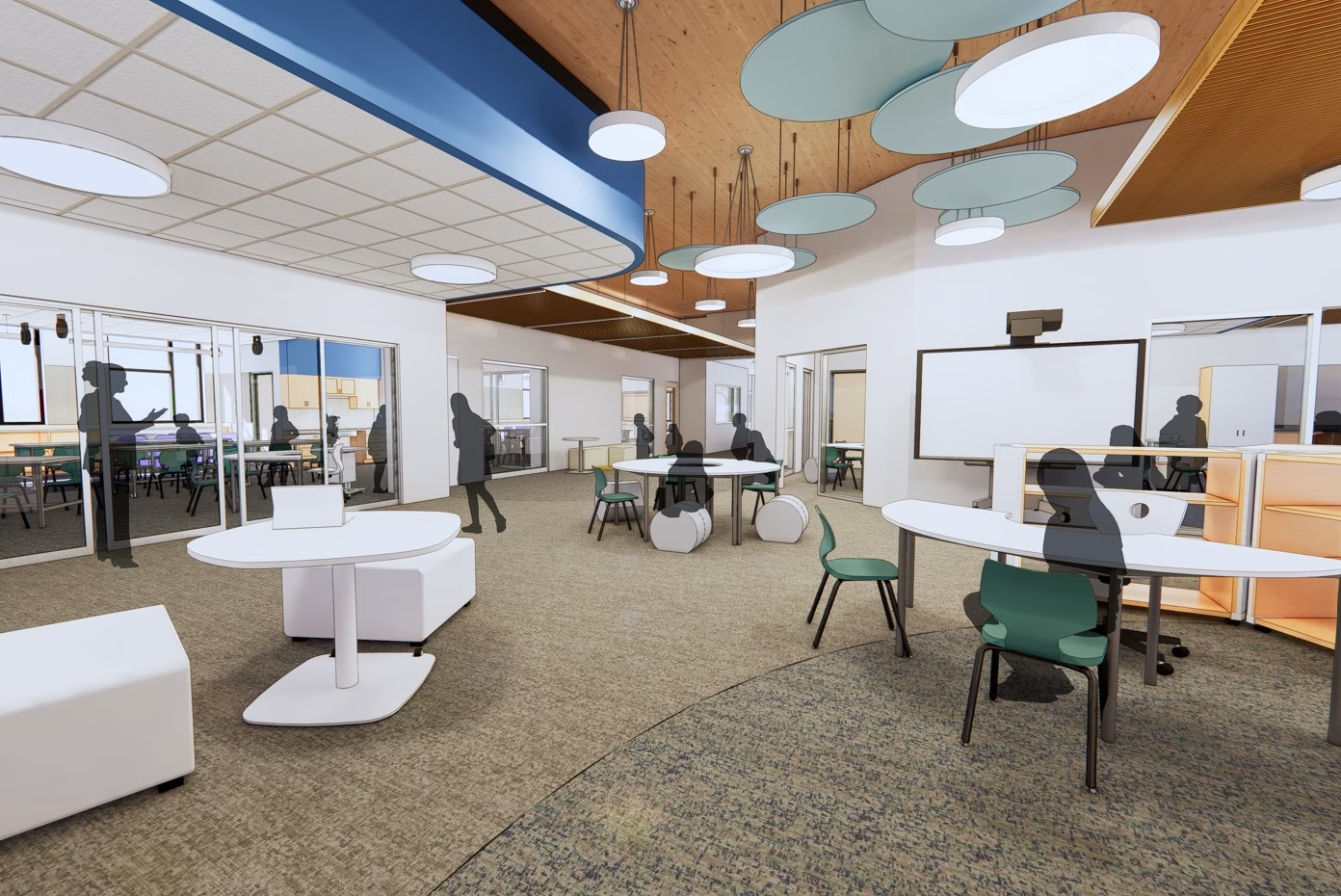
Cucu continued, “Equally exciting is that these spaces also invite collaboration with caregivers and our community! Our neighborhood schools are an integral part of our community. Our school hosts several large events throughout the school year and also weekly programming that supports our students and strengthens our relationships and ties to one another. The new school’s flexible spaces and thoughtful designs, shaped by stakeholder feedback, provide the perfect setting for deep connections and meaningful partnerships.”
Flexibility for Present and Future Learning
Learning doesn’t fit a standardized assembly-line model. Instead, students engage in shorter segments of direct instruction with differentiated small-group learnings, independent research, and hands-on collaboration. Educators are preparing young people for the dynamics of the economy in the 21st-century (and beyond). The learning environment must be designed to meet the learning needs of modern learners.
Using evidence-based practices, the new school buildings provide a range of flexible learning environments, including spaces for large group-oriented work, smaller spaces for tailored supervised learning, and personal, peaceful spaces that encourage student ownership. By design, many of these flexible learning environments are centrally located within cohorts of grade-level students and teachers can both participate in small and large group learning.
These agile spaces are also designed to meet needs as they evolve over time. Whether it’s accommodating changing class sizes or integrating new technologies fifty years from now, flexibility ensures the buildings remain relevant and effective. Ellen Duff, Senior Designer at Fielding International shared that planning for long-term flexibility includes designing structures strategically so future renovations can take place. “The district’s current schools are built with big cinderblock walls, so it’s difficult to adjust them,” Duff explained. “By planning utility layouts and supporting walls strategically, we are making the buildings as acceptable to change as possible.”
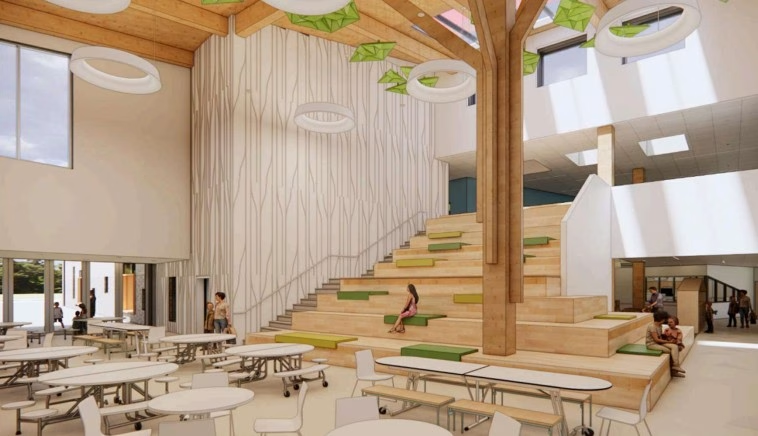
Heather Halabu, Principal at Dicken Elementary, has shared her own thoughts about the new school buildings. “The new Dicken creates several opportunities for flexibility. The addition of common learning spaces between classrooms allows for classes to spread out and encourages collaboration. The moveable walls will allow for multiple classes to come together in a larger space, and create more opportunities for cross-grade projects. The story steps in the heart of the school allow seating for audiences, display platforms for exhibitions, or space to spread out during grade level activities. Our new school will create several opportunities for flexible learning and we are looking forward to seeing the many possibilities come to life.”
Empowerment by Prioritizing Human-Centered Design
From lighting, to furniture, to privacy, AAPS schools are being designed to empower both students and educators using Human-Centered Design. This includes variable seating options that support different learning styles and daylighting placement that enhances wellness and engagement.
Empowerment for students means they have agency to choose where and how they learn, explained Sara Melton, Senior Learning Designer at Fielding International. Whether it’s a “cozy corner” or a collaborative common area, the environment supports the changing needs of individual students. “Kids are empowered to reflect on their own needs for that moment or that project, from the furniture to the flexible spaces,” said Melton. “One student may operate better in a dim and moody space, while another wants to be in a well-lit space. With these designs, there’s opportunities to foster different environments.”
Teachers, too, benefit from design for empowerment and agency. Teachers feel more capable of doing their best work when there are dedicated teacher storage spaces, designated collaboration spaces, and both formal and informal teacher support.
Cory McElmeel, Principal at Thurston Elementary, shared his own excitement about the new buildings. “The new Thurston is designed to empower both students and educators. Our community is empowered by creating a place where students can thrive as independent learners and collaborative problem-solvers. Every space—from classrooms to commons to outdoor learning areas—invites students to make choices, take ownership, and engage deeply. It’s a building that will inspire and equip learners for the world they are growing into. At the same time, teachers are empowered with thoughtfully designed collaboration suites, dedicated storage and planning spaces, and the flexibility to adjust the environment to meet the needs of their students. When teachers have the tools and spaces to do their best work, the impact on students is exponential.”
Collaboration: Fostering Relationships and Shared Learning
At every level—from design to instruction—AAPS is promoting collaboration. Staff collaboration suites, small group rooms, and learning commons allow educators to co-teach and learn from one another, while giving students a chance to experience a team-based approach to education. Duff and Melton shared that AAPS and Fielding have been careful to maintain the ‘culture’ of each school as these design decisions are made. “How people are collaborating together within each school informed how we plan to allow flexibility between spaces,” said Melton. “Whether it’s a whole grade level where kids come together, or paired suites, we’re designing different approaches based on how kids operate and the embedded culture per each school community.”
The physical layout supports student collaboration at both the peer and adult levels. Students move through interconnected suites rather than isolated classrooms. Teachers have line-of-sight supervision that ensures safety while supporting independence. Importantly, these shared spaces are located adjacent to core learning areas, enabling seamless transitions between instruction, reflection, and collaboration.
“The emphasis on collaboration is evident throughout the new designs,” says Will Wright, Principal at Logan Elementary. “Classrooms and shared learning spaces are intentionally flexible, allowing students and staff to move fluidly between areas and work in ways that best support their needs. The design encourages team teaching, small-group instruction, and cross-grade collaboration by creating open, adaptable spaces that naturally invite interaction. Dedicated areas for teacher collaboration also support professional learning and planning, helping to foster a strong culture of teamwork among staff.”
Integration with the World Outside the School Building
AAPS is designing schools that foster a sense of wonder and learning that incorporates the surrounding outdoors. Design elements such as gardens, outdoor learning terraces, and easy access to outside spaces from the classroom are key to building a school that is truly integrated with its environment. “We’ve thought through resource locations with the staff, like where jackets and backpacks are located so students can flow between inside and outside quickly,” Duff explained.
Ann Arbor Public Schools continues to see neighborhood schools as community anchors. There are local elements such as neighborhood walking paths, sledding hills, and playgrounds that reinforce each school’s identity and make them beloved public spaces. Integrating the school buildings into the neighborhood includes planning out environmental factors such as groundwater management, traffic routes, and thoughtful lighting, to ensure these schools remain good neighbors and stewards of the land.
Putting the Four Principles into Practice
The heart of the transformation of Ann Arbor Public Schools into 21st-century schools comes from local educators, students, and families. The public’s vote to approve the bond project that provides funding for critical upgrades and new schools shows the commitment of the greater Ann Arbor area for the district’s plan to create future ready schools.
Melton praised the specificity and care Ann Arbor Public School educators brought to the planning process saying “staff was involved at every stage, from big picture ideas to advocating for the specific and unique needs within their school. It’s been a delight to work with each school!”
Students, too, have shaped the vision. Fielding has held input sessions where students share their favorite spaces with the designers by giving guided tours, or by creating images of ideal classrooms with AI. Students share their desire for a school that includes everyone. Their input included requests for cozy reading nooks and excitement over the addition of multiple elevators.
Looking Forward to a Century of Learning
The reimagining of AAPS’ school environments represents more than a capital improvement project—it’s a social, cultural and educational investment. By prioritizing human-centered design, the district is preparing students for a world that values flexibility, creativity, collaboration, and well-being. And creating buildings that are designed to evolve, the district is committing to a future of useful spaces that continue to provide value to the community for decades to come.
In a world where the future of work and society is increasingly unpredictable, AAPS is choosing to lead with intentionality. As their motto says: Lead. Care. Inspire. Through thoughtful partnership with Fielding International, they are building not just better schools, but better futures.