
As part of the Capital Program, Ann Arbor Public Schools is replacing aging flooring across multiple school buildings with sustainable materials designed to improve indoor air quality, reduce chemical use, and create healthier spaces for students.
Floors are one of the largest surface areas in any school building, and their condition directly affects indoor air quality, maintenance demands, and the daily experience of students and staff. Across Ann Arbor Public Schools, many buildings still contain vinyl composition tile (VCT) flooring installed in the 1990s. Over time, these floors have deteriorated, requiring intense annual maintenance cycles of chemical stripping and waxing. Through the AAPS Capital Bond Program, the district is replacing this aging flooring with modern materials selected for durability, low emissions, and alignment with the district’s Environmental Sustainability Framework.
Five Key Takeaways from this article on AAPS flooring replacement:
- Replacing Aging VCT Flooring: AAPS is replacing deteriorating 1990s-era VCT floors with natural linoleum, healthy resilient alternatives, modern terrazzo and engineered carpet tiles.
- Low-Emission, Carbon-Neutral Materials: The new flooring contains no VOCs and is manufactured from plant-based and mineral-based ingredients.
- Reduced Chemical Use: New floors eliminate the annual strip-and-wax cycle, reducing the use of harsh chemicals in school buildings.
- Healthier Learning Environments: Light-reflective colors, improved acoustics, and anti-microbial properties contribute to environments designed with student health in mind.
- Current Projects: Starting in 2025, approximately 94,000 SF at Scarlett Middle School and approximately 36,900 SF at Community High School has been replaced with several more projects in the planning phase.
Replacing Aging Floors Across the District
The flooring replacement initiative addresses a district-wide pattern of floor deterioration. VCT flooring installed in the 1990s has reached the end of its functional lifespan, and the volume of floors needing replacement prompted the district to identify a long-term strategy. To determine which buildings would receive replacements first, the AAPS Capital Program conducted building audits, or assessments. Jodi Bullinger, Director of Physical Services for AAPS, described the process: “Capital Program has a strategic plan for timing and cadence of flooring replacement. Being with the district, I know there were building audits performed to determine the appropriate triaging.” These audits helped establish a renovation sequence, prioritizing the buildings in the most immediate need of attention.
Materials Selected for Health and Sustainability
AAPS has selected several flooring products, each chosen based on performance characteristics and environmental criteria. One such product is a linoleum made from plant-based ingredients including linseed oil, wood pulp, and jute. Senior Architect at Cadaret Architecture, Frank Fraga, who provided consultation on the flooring projects, described the flooring solution as “carbon neutral, cradle-to-grave,” and noted that the product was validated through a two-year test installation at the district’s Freeman Environmental Education Center Building before being specified for broader use. The product has a 30-year lifespan, can be recycled, naturally prevents micro-organism growth, and contains no VOCs, contributing to improved indoor air quality. The product also shortens the timeline for installation, because spaces can be re-occupied in days rather than weeks.
The district is also exploring a second flooring option, for projects still in the design phase, a mineral-based product made from crushed limestone. By alternating installation types, AAPS will be able to gather comparative performance data between the two flooring systems to make informed decisions about the best use cases for each product going forward.
In spaces where softer, quieter surfaces are appropriate, AAPS is installing engineered carpet tiles with straight fibers and rubberized backing. Unlike traditional looped-fiber carpets that trap allergens and debris, straight fibers release dirt during vacuuming, and the waterproof backing prevents moisture from reaching the subfloor. Bullinger described the product’s cleaning performance: “It’s quite easy to get a stain up. You just spray it with water and use a paper towel.”
Terrazzo: Preserving History at Community High School
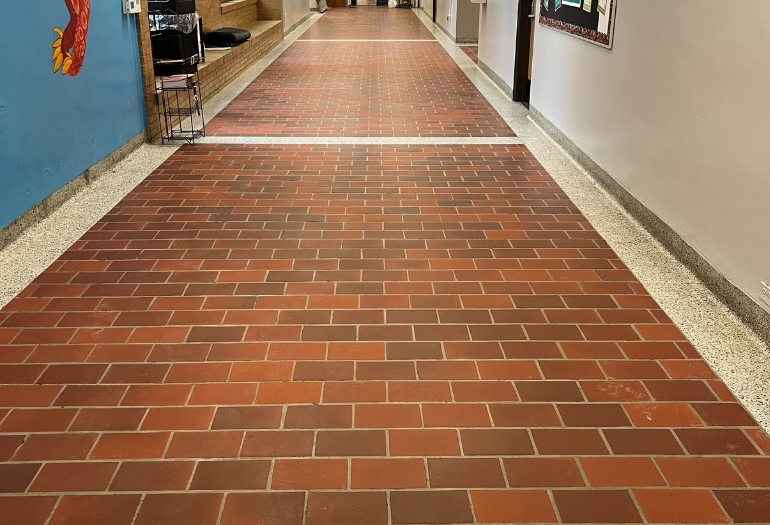
At Community High School, the AAPS Capital Program has installed new terrazzo flooring in the building’s corridors. Terrazzo is a hard flooring composite material made by embedding aggregates (such as marble, granite, quartz, or glass) into an epoxy binder, which is then ground and polished to produce a smooth, continuous surface. According to the National Terrazzo and Mosaic Association (NTMA), terrazzo is constructed using zero-VOC materials, produces little to no off-gassing over its lifespan, and its non-porous finish does not support the growth of bacteria, mold, or mildew. Terrazzo is highly durable, relatively low maintenance, and will last for decades, if not centuries.
Terrazzo is widely used in high-traffic institutional settings, including schools, hospitals, and airports. The NTMA notes that terrazzo floors typically last the life of the structure, and in many renovation projects, original terrazzo can be restored rather than replaced. The material can also incorporate recycled aggregates, such as post-consumer recycled glass.
The decision to use terrazzo at Community High School was driven in part by the building’s historic character. The school’s original first floor corridors feature historic terrazzo installed approximately 100 years ago. Fraga noted that 5,800 SF of the flooring project consists of new terrazzo installed on the corridors of the upper and lower floors designed to coordinate with the appearance of the original, preserving the building’s architectural identity. The new terrazzo material is a thinner ¼ inch thickness, meaning that it can replace the VCT without significant structural changes to doorframes or threshold height.
From a maintenance perspective, the new terrazzo at Community High School is being cared for using a finish-free polishing method. Bullinger explained: “There’s a couple ways to take care of terrazzo flooring, one of which is finishing (commonly referred to as “waxing”). Once you start applying finish, you’re in a cycle. There are ways to polish it when necessary, without using finish.” By avoiding the finishing process from the outset, AAPS custodial teams will not need to commit to the labor and chemical costs of an ongoing waxing cycle.
Reducing Chemical Use and Maintenance Demands
One of the most significant operational changes is the elimination of the annual strip-and-wax/finish maintenance cycle. Traditional VCT floors require custodial teams to apply chemical strippers and reapply wax/finish coats, a labor-intensive process that can occupy one custodian’s entire summer at an elementary school. The new Marmoleum and terrazzo floors require only pH-neutral, environmentally friendly cleaners.
Bullinger explained the impact on summer operations: “In the buildings that host summer programs, we are allocated very minimal turnaround time … with summer programming, you might have two weeks.” Not requiring the floors to be stripped and re-finished/waxed saves custodial staff time for other important cleaning and repairs. The extra time also allows summer program staff more on-site preparation. In addition, the buildings no longer have to be vacated to allow for the dissipation of chemical residue after the finish/wax is stripped from the floors. “So the reduction of harsh chemicals, not having to strip and re-finish/wax the floors, they don’t leach the odors and chemicals, that part is very exciting,” said Bullinger.
The U.S. EPA’s IAQ Tools for Schools program identifies building materials and maintenance practices as factors that directly affect indoor air quality. The State of Michigan’s indoor air quality guidelines for schools also emphasize reducing volatile organic compounds in school environments. Low-VOC flooring materials and adhesives used in AAPS projects contribute to these goals.
Healthier, Brighter Learning Environments
Harvard University’s Healthy Buildings program has published research demonstrating that school building conditions, including indoor air quality, lighting, and acoustics, affect student health and academic performance. The flooring materials selected by AAPS and implemented using Capital Program funds address several of these factors.
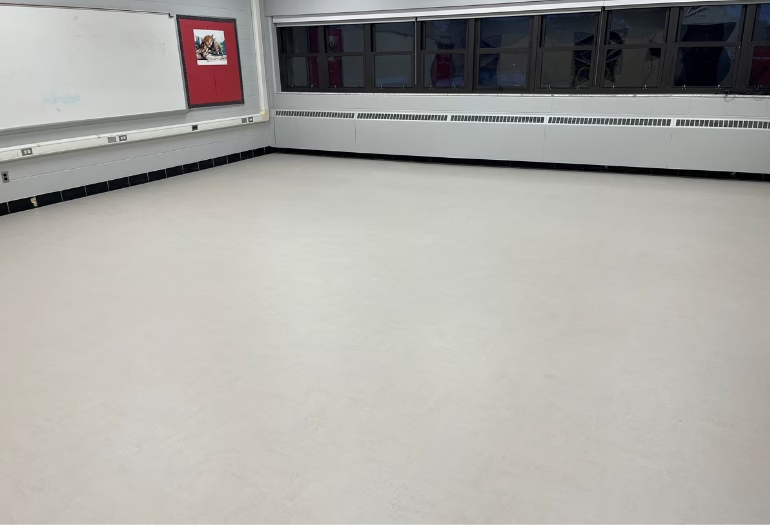
The linoleum products installed in middle school classrooms feature light-reflective colors selected to maximize the effect of natural and artificial light. Bullinger noted the design intention: “You’re taking flooring that might have contributed to a dark and cave-like atmosphere, and you’re bouncing the sunlight and the full spectrum out more.” Public health researchers have documented connections between lighting conditions and both learning retention and mental health in school-age children.
New carpet tiles also address classroom acoustics by absorbing the background noise created by metal chairs and desks on hard surfaces, contributing to a quieter instructional environment.
Current Projects by the Numbers
- Scarlett Middle School: Approximately 94,000 SF of flooring has been replaced. This means the project is approximately 75% complete, which is scheduled to finish summer 2026.
- Community High School: Approximately 36,900 SF has been replaced, including 5,800 SF of new terrazzo in corridors matching the building’s original 100-year-old terrazzo. Classrooms received linoleum, and the auxiliary gym received a more specialized linoleum sport floor.
AAPS is also installing a multi-layered walk-off mat system at building entrances. A new natural sponge-like surface is located in the vestibule to capture large debris, and thicker carpet tile in the main entry is designed for capturing remaining dirt and moisture. At Scarlett Middle School, where installation extended into the school year, teams developed a phased plan, renovating three classrooms at a time while staff relocated to temporary rooms. The AAPS Capital Program, working with Gilbane Building Company, continues to coordinate flooring projects with academic calendars to minimize disruption to AAPS students and staff.
Looking Ahead
The flooring replacement projects at Scarlett Middle School and Community High School represent one component of the AAPS Capital Bond Program’s broader work to update aging infrastructure across the district. Each project addresses specific building conditions while contributing to district-wide goals for environmental sustainability, indoor air quality, and reduced chemical use. As additional buildings are assessed through ongoing audits, the performance data gathered from the current installations of linoleum and future installations of mineral based resilient flooring, will inform future material selections across the district. Information about the AAPS Capital Bond Program, including project timelines and building-specific updates, is available at a2schoolsbond.org.
*Title photo: Scarlett Middle School